
Price hyper-personalization: how to implement regional pricing to improve margin and competitiveness
The same price list does not perform equally in two different cities. Price hyper-personalization uses AI to adapt each price to the demand, competition, and purchasing power of each zone, protecting margin without losing competitiveness.
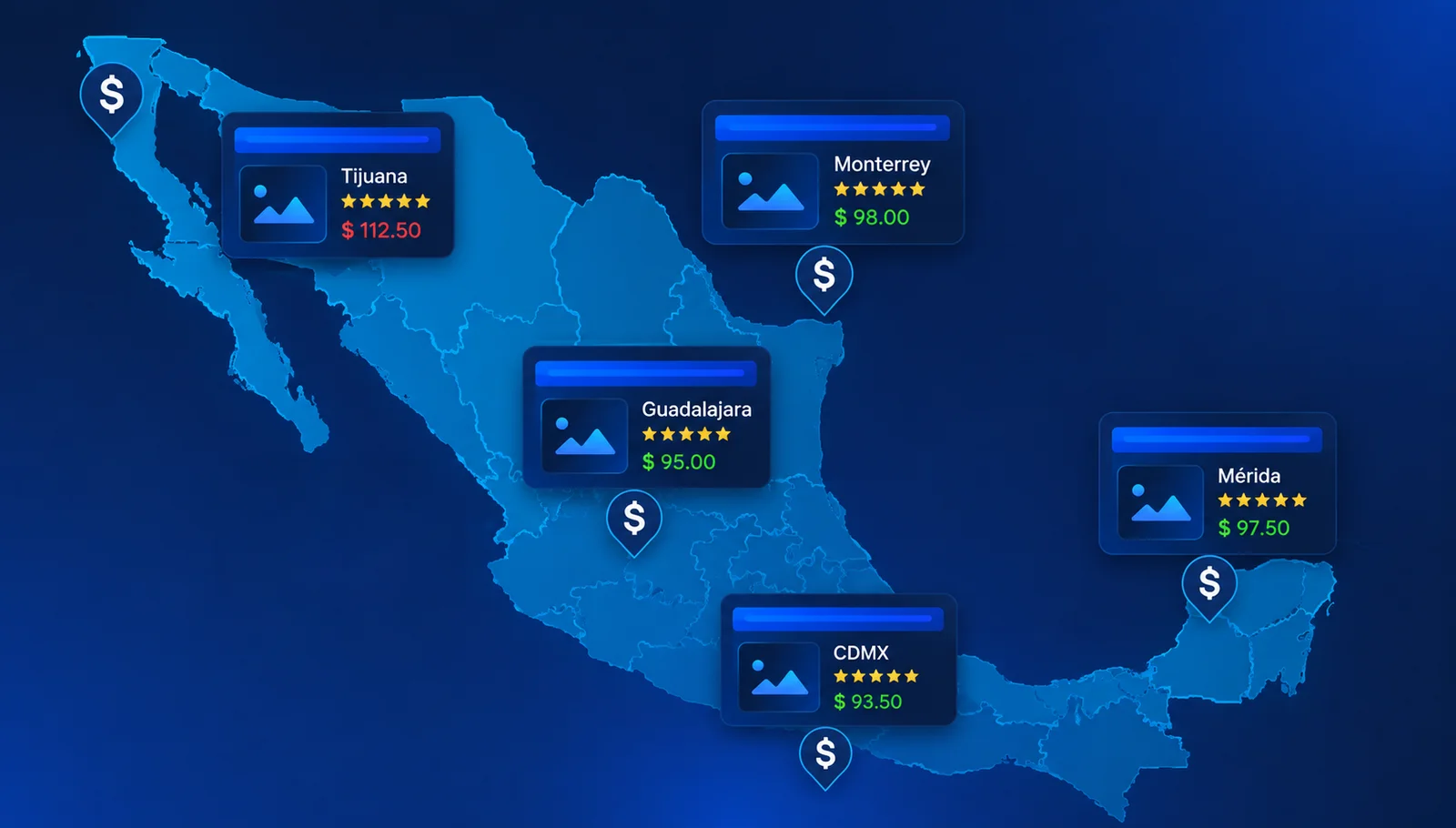
For years, setting a single price for all markets was the norm. But that logic no longer matches business reality: each region has its own level of demand, price sensitivity, competition, and purchasing power. Treating them all the same means leaving margin — or sales — on the table.
Brands that keep the same pricing across all locations, regardless of each region's potential, are losing ground to competitors that do adjust their strategy by zone.
This is where price hyper-personalization comes in: an evolution of traditional pricing that combines artificial intelligence, machine learning, and real-time data analysis to decide precisely how much to charge, to whom, and in what context. Instead of asking "what is the right price for this product?", companies adopting this approach ask "what is the right price for this customer, in this market, under these conditions?".
One of the most effective applications of this strategy is regional pricing: adapting the price of a product or service to the particularities of each geographic zone — demand, competition, operating costs, and elasticity — to protect margin without losing competitiveness.
Key Takeaways
- 1What are regional prices and geographic prices?
- 24 key factors for setting price
- 3Benefits of geographic pricing
- 45 tips for successful geographic pricing strategies
- 5How do you turn all this data into a pricing decision?
- 6How does AI help optimize regional prices?
- 7Frequently asked questions about regional pricing
What are regional prices and geographic prices?
A pricing strategy is the process by which a company sets the value of a product or service considering the benefit it delivers to the customer, seeking to cover costs and generate profitability. It normally draws on manufacturing costs, market demand, the value perceived by the consumer, and competitor prices.
Geographic pricing (or regional pricing) takes that logic one step further: instead of a single nationwide price, the price varies by city, zone, or even point of sale, following the real behavior of each market.

4 key factors for setting price
Production and operating costs
Raw materials, labor, marketing, and other associated expenses.
Product life cycle stage
Introduction, growth, maturity, or decline.
Target audience
Purchasing power, needs, and price sensitivity of the segment you are addressing.
Competition
Understanding how you differentiate, without falling into the trap of simply matching prices.
Benefits of geographic pricing
The better you understand the nuances of pricing by zone, the easier it will be to adapt your strategy to succeed in any region. These are the main benefits:
- Revenue maximization. By setting prices according to the specific conditions of each market, companies can optimize their profit margin instead of applying a uniform rate that does not reflect local reality.
- Adaptation to local market conditions. Each region has different consumption preferences, income levels, and cultural norms. Adjusting price accordingly usually translates into greater customer acceptance and more sales, while avoiding pricing too high or too low for a specific market.
- Local competitive advantage. Matching or beating competitors in each zone gives you a stronger position, especially in highly competitive markets where price is often the deciding factor for the consumer.
Want to see the real price of your category in each zone before defining your strategy? Our GeoLocation & Location Rating module — included in the AI Pricing Optimization Engine — maps prices and competition by point of sale with heatmaps and store score ranking.
See GeoLocation & Location Rating →5 tips for successful geographic pricing strategies
Implementing regional pricing correctly requires method. These are the practices that make the difference:

Assess market demand
Understanding consumer buying behavior in each region is the starting point. Market research helps identify how demand varies and how consumers value your product or service in each zone. Factors such as local climate, cost of living, average income level, and competitor activity directly influence willingness to pay.
Align the pricing strategy with business objectives
Not every brand wants the same thing when entering a new market. A premium brand may keep high prices across all regions to reinforce exclusivity, even in markets with few luxury consumers. An affordable brand, in contrast, may choose to localize its prices according to each zone's purchasing power to broaden its customer base.
Analyze regional economic and cultural factors
Economic conditions, cultural influences, and local regulations directly impact price perception. Consumer psychology varies by region: some markets prioritize affordability, while others associate a higher price with quality and status. In regions with strong family structures, for example, group packages may work better than individual sales.
Implement cosmetic localization
First impressions are usually visual. Product packaging and website design must align with local cultural expectations. Translation is only part of the process: region-specific imagery, color palettes with cultural meaning, and campaigns aligned with local dates and events all matter too.
Roll out gradually and test
The perfect balance between competitive price and profitability is rarely achieved on the first attempt. That is why it is worth testing the strategy in limited markets before scaling it. A/B tests and pilot programs make it possible to measure real consumer response and adjust price before a full rollout, minimizing risk.
How do you turn all this data into a pricing decision?
The challenge is not a lack of data, but a lack of actionable decisions drawn from it. One of the most common mistakes is trying to measure everything: an excess of metrics generates noise and complicates decision-making. Instead of chasing a hundred indicators, it is more effective to identify five or six well-defined KPIs aligned with business objectives. Analyzing what already happened — last month's sales, budget deviations — is necessary, but not sufficient on its own.
How does AI help optimize regional prices?
Setting the right price for each product or service is key to maximizing sales and profitability, and optimization based on real data helps balance that profitability with the value the customer perceives.
AI-based price optimization uses algorithms to process market data in real time and propose the best possible strategy. To define the ideal price, this type of software can analyze:
Customer data
Surveys, demographic information, and behavioral patterns.
Business data
Sales history, operating costs, and competitor analysis.
Broader market data
Specific geographic information, general economic trends, and demand fluctuations.
Beyond setting an optimal price, AI also makes it possible to move toward personalized and dynamic pricing, something especially relevant to the hyper-personalization we mentioned at the start of this article. If you also want to understand how demand behaves in response to price changes before touching your list, you may be interested in our article on elasticity and advanced analytics.
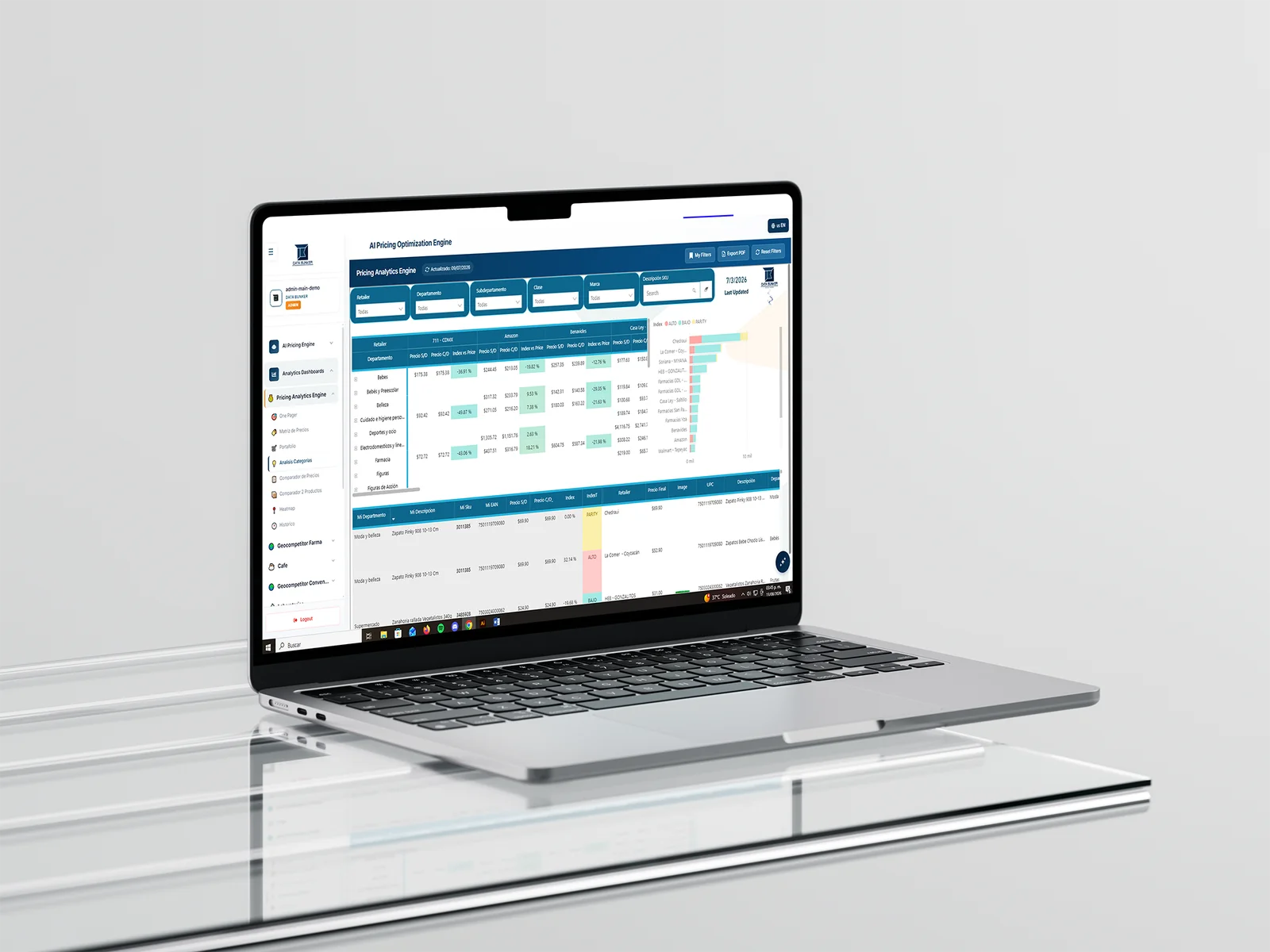
Regional pricing is not simply about raising or lowering the price depending on location: it is the result of deeply understanding the demand, competition, culture, and economic conditions of each market, and translating that understanding into actionable decisions.
Frequently asked questions about regional pricing
What is price hyper-personalization?
It is the use of artificial intelligence, machine learning, and real-time data to define a specific price based on the customer, the market, and the context, instead of applying a single price per product.
What is a regional or geographic price?
It is the price of a product or service adjusted to the particular conditions of each geographic zone: demand, competition, operating costs, and elasticity, instead of a single nationwide price.
What is the main benefit of regional pricing?
Maximizing margin without losing competitiveness: the price reflects the reality of each local market instead of applying a uniform rate that leaves money on the table in some zones and scares away sales in others.
How do I start implementing regional pricing without risking my entire pricing?
With a limited pilot: test the strategy in a small number of zones or stores, measure the real market response with pricing analytics, and scale gradually once the impact on margin and volume is validated.
Conclusion
Hyper-personalization, driven by artificial intelligence and real-time data, makes it possible to take regional pricing strategy to a scale and precision that were previously unattainable.
Want to know how your company can start implementing regional pricing with AI? At Data Bunker we help leading retail, pharma, and CPG brands monitor, analyze, and optimize their prices by zone, with actionable recommendations that improve margin from the first month.
Related articles
Ready to optimize your pricing strategy by zone?
Request your pricing diagnosis or schedule a 30-minute demo with our team.
Data Bunker
All-in-One pricing intelligence solution: monitoring, AI optimization, and execution. 50+ top clients in Mexico.